
Golden Hour Explained: Why the Time of Day Decides Your Shoot's Result
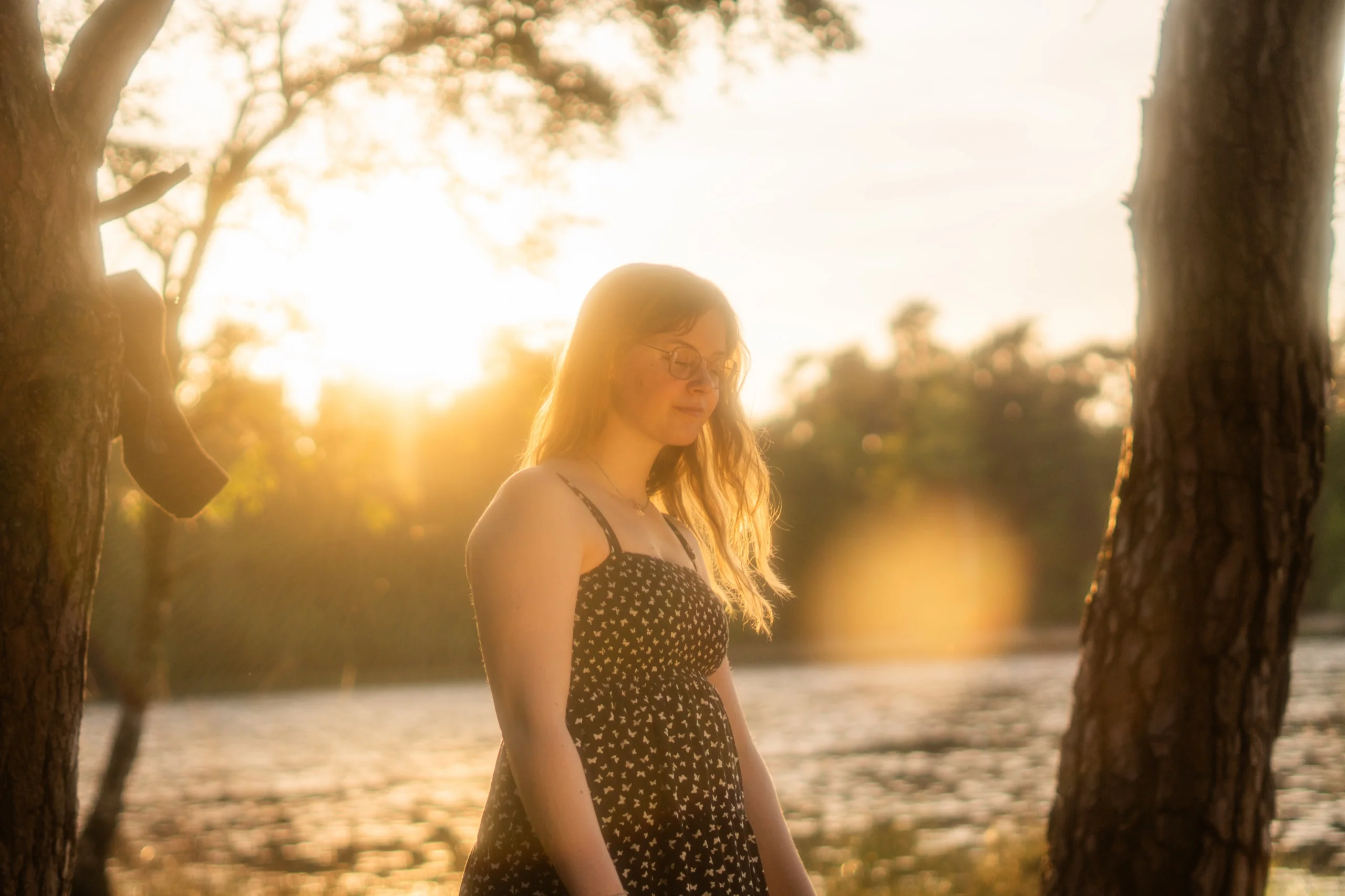
Short answer: in harsh midday sun, bright patches and hard shadows alternate across your face — that almost never looks flattering in photos. During golden hour, the hour or so before sunset, the light is soft, warm, and can be used as backlight behind you. You can technically shoot at any time of day, but the difference in the result is noticeable — and easy to use to your advantage with a little planning.
Why midday light is tricky
When the sun sits high in the sky, it throws hard, small-scale shadows — under the eyes, under the nose, in the neckline. If bright sun alternates with shade from trees or buildings, you end up with uneven bright and dark patches across the face. That's not a camera issue, it's simple physics: hard light, hard result.
On top of that, direct midday sun makes you squint automatically, which quickly reads as strained rather than relaxed in photos. Even the best camera can barely fix that afterwards — which is exactly why I'd rather address it at the scheduling stage than try to correct it later in editing.
What makes golden hour different
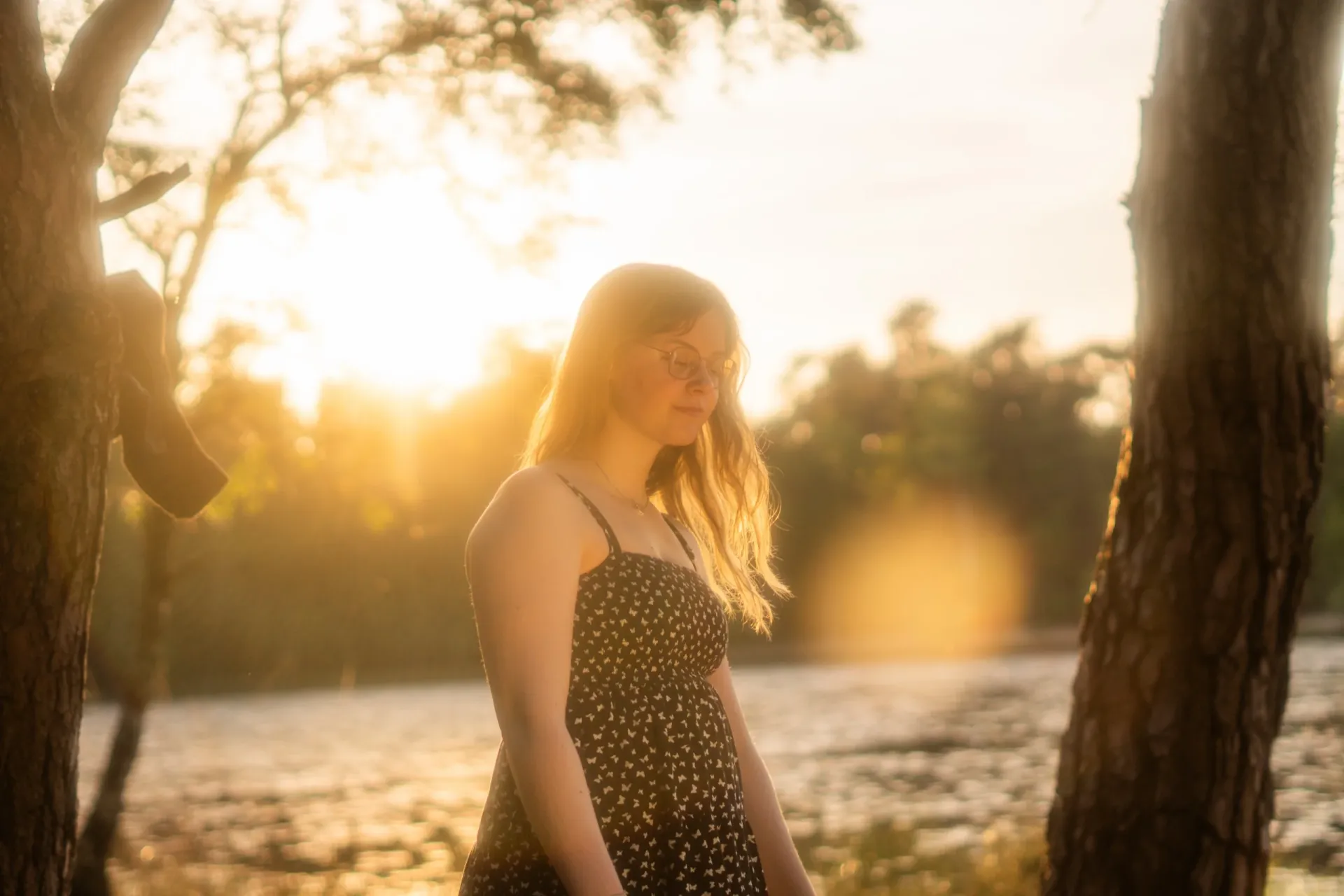
Shortly before sunset, the sun sits low on the horizon. Its light has to travel through more atmosphere, which softens it and warms its colour. Skin automatically looks more even, colours look richer. And because the sun sits so low, I can position it behind you — as warm backlight that outlines you in gold instead of shining straight into your face.
In that setup you can also comfortably keep your eyes open without squinting — a small but noticeable difference that makes whole sets of photos feel far more natural. That's exactly why golden hour is my preferred time for portrait and couple shoots.
Does that mean other times of day are off the table?
Not at all. I also shoot during the day, for example on overcast days — the sky then acts like a giant softbox and the light is already soft. And obviously a wedding day can't be scheduled entirely around golden hour either. But when you have a free choice, like for a portrait or couple shoot, I almost always recommend the hour or two before sunset.
For weddings, I make a point of building in at least a short couple shoot within that exact window — even when the rest of the day runs on a fixed schedule that has no regard for the light at all.
My tip for planning it
Just check a weather app for the exact sunset time on your chosen day and plan the shoot to catch the last hour before it. In summer that's correspondingly late in the evening; in autumn and winter it's already early afternoon, which surprises a lot of people.
If you're unsure about the exact time, just get in touch — I factor it in myself when we schedule the date, so all you need to worry about is showing up on time.
A small bonus of golden hour: because the sun moves so quickly at that point, the light changes noticeably within just a few minutes — so a single shoot often gives us several completely different moods, from warm gold to a soft, almost pink afterglow just after sunset.
Want to plan your shoot for the right time of day? Message me and I'll help you pick the date.
Visit the main site– Hannah